
The Truth Behind Resale
The things you didn't know you didn't know about the secondary ticket market
Jacob Citron
10/24/202511 min read
Listen here, or read below
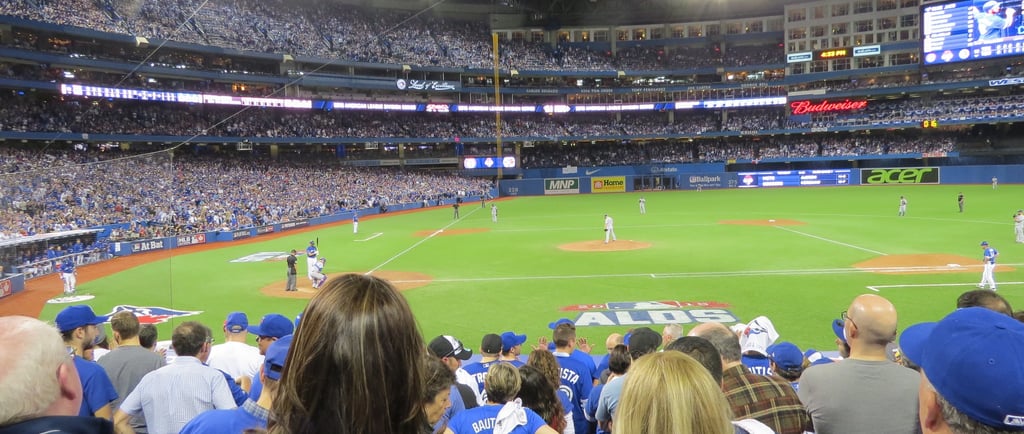
There is much ado about the secondary ticket market this week. Resale prices for the Blue Jays are skyrocketing ahead of the World Series. There are many screenshots of $10,000 tickets popping up on my socials.
The reality however is that most people have no understanding of the ticketing ecosystem. I spent five years working for Ticketmaster, including working closely with MLSE during a Raptors championship run that infamously featured a $100,000 courtside seat (it didn’t sell at that price, by the way).
And look, of course - price gouging is wrong and taking advantage of people is immoral. But… should that even matter in this situation? We aren’t talking about bread or rent… you don’t need tickets to your favourite artist or huge sporting event. This is capitalism after all. You are emotionally attached to sports and music but it is not a God-given right that you need to be in the building.
Tickets like these are fundamentally luxury goods. It’s no different at the end of the day than owning a Tesla or a Rolex or a Peloton. You’re making a choice on how you want to spend your money. And it is your choice to say yes or no.
No one is forcing you to go to the World Series. So I’m not sure it’s immoral to charge outrageous prices.
There’s also an intense scarcity with these games, they are totally unique. They only happen once and diehard fans want to go to as many games as possible at a reasonable ticket price.
For a little math, let’s say there are 7 million people in the GTA, 4 million people that want to go to the game and that there are 40,000 seats in the Rogers Centre. That means approximately 1% of people that want to go to the game will be able to go to the game.
What should that ticket be worth? What is its market value? $10 $100 $1000?
Sure, you might think it’s only worth 100 bucks - but there is an implication then that you deserve to go more than somebody else at $100 a ticket?
You really really want to be there, but the point is that everybody wants to be there and when the supply and demand is as such, this is how it plays out.
There’s also this notion that you’d be happy to go to this event for $100. For a more invested fan, $100 might not be considered a lot of money. They might be willing to pay $1000 to be in the house.
So knowing that this discrepancy exists - if you had tickets, why wouldn’t I put them up for an outrageous amount of money? Why not go fishing as it were. The “fail case” is that you go to the game - and there’s an off chance that someone wants to hand you 10 grand for tickets to a sporting event. What’s the downside? There’s no need to eliminate the possibility. It’s much better odds than winning the lottery. All that being said, I don’t think there’s something amoral about offering somebody a terrible deal.
In that $100, vs $10,000 scenario - what would you do if a private buyer was offering you $1000 for that ticket? Would you spend $100 for the experience or would you sell? You could pocket the $900 and watch from the bar or on the new TV you just bought with those profits. $1,000 isn’t enough? Fine - what about $2,000? It may be higher still - but there is certainly a point where you’re going to take the money and run.
For a practical example: I learned someone in my network sold a pair of standing room tickets for $1,450 to one of the World Series games, and frankly that seems pretty fair to me. Going to a World Series home game is a once in a lifetime opportunity for Blue Jays fans. For the guy that did the selling - why would I begrudge him making money on that exchange? He saw an opportunity and he capitalized on it. Why wouldn’t he go fishing?
The economy is terrible out there - how can I judge someone from trying to turn a profit when he can’t find a job. I don’t know this person that well, but that could be a whole month's rent for him. Is that immoral? I don’t think so.
This is all getting to the crux of the omnipotent problem that colours the ticketing industry. The tickets are not priced at their fair market value. They are definitely worth more than face value - but what is that number? Well, they are worth exactly what someone is willing to pay for them. Not helpful, I know - because it is incredibly hard to figure that number out. There are too many variables.
It’s not like housing or bread where it’s clear what these things should cost. It changes so quickly and dynamically. For example, the Jays run in 2016 had similar traits. Prices were extremely high and I certainly couldn’t afford them as an entry level arts worker. But when they were down three - nothing to Cleveland in the championship series and were playing a day game - tickets were available for $20. There were empty seats in the Rogers Centre that day.
If the Jays had been up three-nothing in that series you wouldn’t find a seat in the house and they would be selling like hotcakes. Given the speed at which these variables change, it’s impossible to predict that. Resellers would have lost a lot of money on those games.
For another example, the resale market for the Toronto Maple Leafs is terrible right now. If you’re a huge Leafs fan - now is the time to buy Leafs tickets. Scalpers are losing a tremendous amount of money. Everyone is focused on the Blue Jays, so the Leafs take a back seat. This would have been impossible to predict. MLSE is actually changing the start times of their games, which is awesome, but it’s not simply a gift to fans. It’s because they can’t sell out Scotiabank Arena and no one is watching their television broadcasts. They are finding themselves in a position where they have to incentivize fans to go to the Leafs game.
They aren’t in a position to lower prices however because that would be unfair to their season seat holders who lock in their prices well before the previous season even ends. This is another huge omission in this conversation - there are people who pay for the whole season and thus have priority access. They are not complaining because they are winning and going to the games or selling them for a profit.
Yes, many of these season seat holders are exclusively scalpers (what the industry calls brokers). They are in it for the money. They don’t care about the team and they certainly don’t care about you. They do provide an essential service however for the sports team. They buy the tickets that no one else wants. They’re purchasing twenty 500 level seats on a Tuesday night against Oakland in April. And they may or may not be losing money in that situation.
Keep in mind though, that these brokers are a distribution channel for the teams. The Jays need to sell as many seats as they can to 81 games a year - every year. They cannot do it without help. They don’t sell out unless they are winning, and frankly it is rare that they are winning.
To really dig in further to the supply and demand calculation - how many tickets do you really think were available for game one anyway? When it gets to the World Series, it’s actually a global competition for access. Think about all of the sponsors. Not just for the Blue Jays, but for the MLB - they all come knocking this time of year. Then you’ve got the banks, the credit card companies, the broadcast companies. You’ve got player unions, MLB executives, the players themselves and all of these people’s families. Each of them needs to be accounted for. And every single one of them is taking up a seat that you can’t have yourself. It’s a zero sum game. Oh, and there’s also an entire away team with the same constraints.
So to revisit our numbers - after all that and the season seat holders, how many tickets are actually available to the public?
We started with our capacity at 40,000. So let’s use a conservative estimate that three quarters of seats are accounted for, leaving 10,000 seats available to the public. We said that 4 million people want to go to the game - we can cut that number in half to two million. And that one % number is now down to half a percent. So now, you, the pleb are suddenly competing with 200 other people for that one seat.
So of course $200 isn’t going to be enough. Would $500 do it? For 500 level outfield tickets? For you perhaps. Or perhaps $500 is way too expensive - but there are tonnes of people that make that kind of money in an hour. There’s certainly 10,000 of them in the city. They have friends and families too. And clients, or they are businesses and corporations who have extreme buying power. When you really think about it, these tickets should be worth a lot of money. The demand is so extreme.
And yes, maybe they should reserve some seats for the diehards - but how many? Is 1000 low cost seats enough? And what’s to stop those people from trying to make money on the exchange? How is the team supposed to regulate that? How are they supposed to check? Especially when World Series tickets go on sale Tuesday and the event is on Friday… it’s simply not worth the headache for the sports team. You, the fan - are going to watch the game, no matter what. They know the tickets will sell, (There are no blue dots left on those ticketmaster maps) so really why would they lower prices just for you. Do you deserve it more than the people who can pay?
On top of all that, sports teams are in the business of making money. It doesn’t make sense for them to get generous when they finally achieve that plateau. This is when they should actively be trying to make MORE money.
A fantastic solution that people talk about all the time is to have governments put in some kind of regulations about resale - although it would be nearly impossible to enforce. People love to blame Ticketmaster and their fees, but those are warranted frankly - they are providing a marketplace for you to buy seats. They are oftentimes accused of being a monopoly, but It is not a monopoly, especially in the area of resale. You could go find a guy on the street and sell him your pair to the Raptors game tonight. There are many sites out there like StubHub. No one is complaining about face value (this time around at least).
Yes, they collect a fee - it’s about 20% of the ticket price. But that’s 10% from each side - which is pretty fair in my opinion. They are facilitating the exchange in a secure way, and the tech is amazing. You do just about zero work. I mean, have you tried biking downtown and approaching strangers about selling them tickets? Not fun, probably not worth the headache, definitely worth 10% for you just to throw them online.
For the buyers, the security and authentication is so important - do you remember the days when you’d purchase a printed PDF from a man who maybe was homeless. It was roulette trying to scan that thing. He probably copied it 10 times, and it was a race to the gate. No thanks!
And remember my acquaintance from earlier? If you regulated resale on ticketmaster - he’d still use instagram or Kijji and get them sold. You can’t really enforce - although the threat does help.
I like to think of resale on ticketmaster like the safe injection site of ticketing. Do I like resale? No I do not. Does it exist and are people going to do it? Absolutely. So, maybe it makes sense to provide a safe environment for them to do their business in. I also find it comical that most people who love safe injection sites, also hate resale.
You could try identity locking the ticket but doing that at scale is incredibly challenging. It also means if you have a group you need to have everybody in your group listed or at least with the ticket purchaser and again that doesn’t prevent resale necessarily, and it also raises concerns about data collection, etc. These processes are designed to be seamless - you want people getting in the door as quickly as possible, all of a sudden the Jays have to ID everybody coming in the door? Again, No thanks! But there might be a solution there someday.
Look, if you hate the system, well so does everyone, and maybe you can start a business that solves it. That way you could probably go to the World Series yourself. The ticketing industry is ripe for disruption.
Hopefully I’ve done a decent job of explaining the landscape. I’ll wrap up with my own strategies that I’ve come up with over the years.
If you’re really a real die hard then you’ll have contingencies to get in the building for the games that matter. I have it for the Maple Leafs for example. I do not have it for the Blue Jays,
First, you could go work in the industry and become incredibly successful at it. The low level Blue Jays employees, the marketing professionals who do the graphics for example, are not going to be at the game on Friday. The executive vice president who is their boss’s boss’s boss - will be.
You can try making so much money that none of this is relevant to you. I’ll let you decide how you wanna do that. Maybe you can try scalping - seriously it’s big business and taxing it is difficult.
If you can’t make the money yourself, make connections with those people. For every $10,000 ticket on the market there’s got to be a dozen people at least that are going for free.
The sponsors and corporations are taking their people. Foundations are taking their donors. People are taking their accountants or their clients for free and that’s gonna help them seal the deal.
There is a prestige factor with this stuff: sports and winning. Those have emerged as a social status indicator. Especially in the age of social media where you get to share it on your instagram. To fix that, you’re going to have to change a lot more about society than just figuring out how to get into the Rogers centre one night a year.
You can try beating the scalpers at their own game. I met a couple guys that have a wonderful system for the Maple Leafs. They will go down to real sports the second it opens and get a table. They’ll eat their dinner, they will drink some beers, and they will check Ticketmaster to monitor the prices as they inevitably drop closer to game time. Sometimes they’ll even wait until the first period is halfway done.
This strategy is genius. The fail case is that they watch the game at one of the best bars in the city to do so. On the other hand, if the price drops to a level they think is acceptable, they will pull the trigger and head on into the rink. They save a tonne on beer and concessions too.
There is a game of chicken here, some resellers get greedy. And oftentimes they are punished for that greed.
I am lucky enough to have my hands on Leafs seasons tickets. I sell them with the goal of making money, but also and most importantly the goal of being sure that I can get into the game when they’re in the Stanley Cup finals. Which by the way, is still going to be $2,000 bucks for a pair at face value.
Another strategy is to just go down to the venue and hope to get lucky. There are many instances of very nice people randomly helping a stranger. Their friend bailed at the last minute, and they just want to recoup their costs. A friend did this for Taylor Swift last year.
Finally, you can become a season seat holder. I mean, if you are so passionate that you need to be at the World Series - then surely you are passionate enough to buy the full 81 games a year, right?
Is that too expensive? Well then get some partners to go in with you. Split your tickets, do a draft, have some beers, enjoy it. But make sure you’re very clear about what happens in the playoffs.
At the end of the day, the fundamental problems are clear. They are as follows: Tickets are not priced at their market value. It’s simple supply and demand. There are a million people that want to get into the World Series and only 40,000 seats in that building. There are ways to get in, but you need to be smart about it.
Let's Go Blue Jays!
At accordingto.ca, We Believe in Rebuilding the Missing Middle.
If you believe in what we’re doing:
Subscribe. It’s free, and it tells us you’re with us.
Share. If something moves you, pass it on. Help us grow.
Contribute. Know someone who should be writing for us? Tell them. Or tell us.
We’re building something here. And we can’t do it alone.
accordingto
Our mission is to refresh the conversation, and democratize public discourse. We platform smart and spectacular people who are ready to challenge assumptions, explore nuance, and speak with clarity.
Contact
Subscribe
info@accordingto.ca
Discord: https://discord.gg/GUZeHrmZ
© 2025. All rights reserved.